
Public health is all about keeping communities healthy and preventing illness before it happens. It’s more than just treating people when they get sick, it also includes encouraging healthy habits, creating policies for better healthcare, and making sure everyone has access to quality medical services.
People who work in public health can have many different jobs. Some examples include epidemiologists, who study and track diseases; health educators, who teach communities about healthy living; health managers, who run hospitals or clinics; and environmental health specialists, who make sure our surroundings are safe and clean. With health challenges becoming more complex around the world, there is a growing need for skilled public health professionals.
In this blog, we will explore the key skills you can gain in public health, the exciting career opportunities available, and the future trends shaping this growing field. We’ll also look at how pursuing a Master of Public Health can prepare you to make a real impact in your community and beyond.
Skills You Will Acquire in Public Health
A career in public health equips students with a wide range of practical and analytical skills. Some of the key skills include:
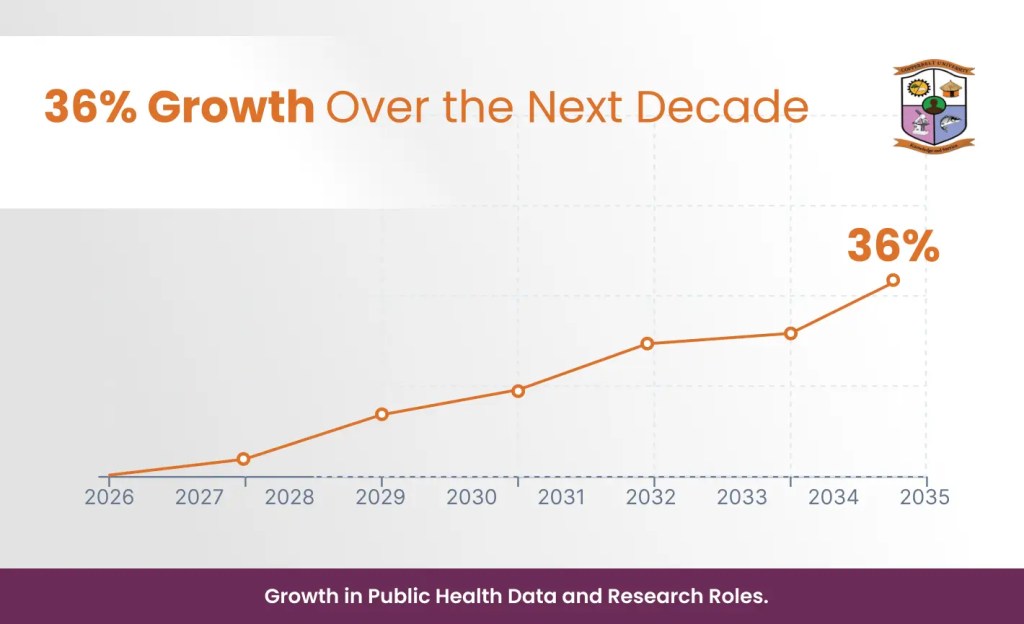
- Data Analysis and Research: Public health professionals use data to identify trends, assess risks, and make informed decisions. Public health data scientists and research specialists are among the fastest-growing roles, with a projected growth of </spanabout 36%over the next decade.
- Policy Development: Understanding health policies, regulations, and community needs is critical. Public health specialists often advise governments and organizations to develop strategies that improve population health outcomes.
- Program Management: Professionals learn to design, implement, and evaluate health programs. This includes project management, budgeting, team leadership, and monitoring progress. Careers in medical and health services management are expected to grow about 23% from 2024 to 2034.
- Communication Skills: Public health experts must communicate effectively with communities, policymakers, and healthcare providers. This involves health education campaigns, public awareness programs, and stakeholder engagement.
- Critical Thinking and Problem Solving: Identifying health challenges and implementing solutions require analytical and strategic thinking.
Acquiring these skills opens doors to diverse opportunities in public, private, and international organizations.
Opportunities in Public Health
The public health sector offers a variety of career paths that are both fulfilling and impactful. Across OECD countries, about one in every nine jobs (10.9%) is now in health or social care, highlighting the central role this sector plays in modern economies.
In the United States alone, healthcare and related services employ roughly 19–20 million people, or about 12% of the workforce as of 2025. This data reflects global trends, and it illustrates the strong potential for employment in public health.
Some of the prominent career opportunities in public health include:
- Epidemiologist: Tracking disease patterns and controlling outbreaks.
- Health Policy Analyst: Advising governments or NGOs on effective health policies.
- Health Educator or Promoter: Creating programs to improve community health awareness.
- Health Informatics Specialist: Managing healthcare data systems, a field projected to grow 15% over the next decade.
- Public Health Administrator: Leading health programs and managing teams.
The Master of Public Health program at CBU eCampus is the most in-demand course, reflecting the growing interest in these careers among students. Graduates are prepared to take on leadership roles, contribute to policy development, and implement programs that positively impact society.
Essential Skills Needed to Succeed
To thrive in public health, professionals must continuously update their knowledge and skillset. Some critical skills include:
- Analytical and Statistical Skills: Ability to interpret health data to guide decisions.
- Digital Literacy: Familiarity with health informatics, electronic health records, and data visualization.
- Leadership and Teamwork: Managing interdisciplinary teams and programs effectively.
- Cultural Competence: Understanding community diversity and designing inclusive health interventions.
- Problem-Solving: Tackling health challenges creatively and efficiently.
By developing these skills, graduates can adapt to evolving health challenges and contribute to sustainable health solutions. The benefits of studying at CBU eCampus also include flexible learning that enables students to work while advancing their education.
Future Trends in Public Health Careers
The field of public health is rapidly evolving, influenced by technological advances, global health challenges, and policy shifts. Here are some future trends shaping careers:
- Data-Driven Health Solutions: Public health professionals increasingly rely on data analytics and artificial intelligence to predict disease outbreaks, optimize resources, and improve care delivery.
- Digital Health and Telemedicine: With growing connectivity, digital health solutions and remote care are becoming central to healthcare systems.
- Global Health Initiatives: Cross-border collaboration to tackle pandemics, climate change impacts, and health inequities is expanding career opportunities.
- Sustainability and Environmental Health: Climate change and environmental factors are influencing public health strategies, creating new areas for research and policy development.
- Integrated Health Services: Coordinated healthcare services, combining preventive care with clinical interventions, are emerging as a standard model.
The <importance of public health experts in Africa cannot be overstated, as the continent faces unique health challenges. Building a workforce skilled in modern public health approaches is critical for achieving sustainable health outcomes.
Thinking About Pursuing Your Master’s Online?
Many students wonder how to balance a rigorous program like an MPH with work commitments. CBU eCampus offers flexible programs that enable students to manage full-time jobs while advancing their education. Resources on full-time study and work provide guidance on managing time, staying productive, and making the most of online learning.
Additionally, understanding the realities of online degrees is crucial. Debunking myths about online learning can help students confidently pursue their MPH, as highlighted in top myths about online degrees. Frequently asked questions about programs, study schedules, and career outcomes are addressed comprehensively in the CBU eCampus FAQ section.
Conclusion
A career in public health offers unmatched opportunities to impact communities positively while developing versatile skills that are in high demand globally. With strong projected growth, diverse career paths, and the rising need for trained professionals, pursuing an MPH at CBU eCampus is a strategic choice for aspiring public health leaders in Africa.
By acquiring analytical, managerial, and communication skills, graduates can adapt to the evolving landscape of healthcare. Whether working in epidemiology, health informatics, policy development, or program management, public health professionals play a pivotal role in shaping healthier societies.
The future is bright for those prepared to embrace these challenges and opportunities, making public health a career that is both impactful and rewarding.