admissions@cbu.ecampus.edu.zm


For aspiring public health professionals, online Master of Public Health programs can present a variety of career choices, but choosing the best one might require time and effort.
With so many alternatives, some people struggle to choose a path that matches their interests and skills after getting a bachelor’s degree.
Fortunately, several things can aid one in selecting a graduate school and securing a rewarding career.
First, you should study what you can do with a Masters in Public Health. Prospective graduate students can pursue a wide range of public health occupations.
But first, let’s learn more about the degree itself:
Overview of Public Health as a Discipline
Public health focuses on improving the health of populations—through prevention, education, policy, and system-level interventions. Unlike clinical care, which treats individuals, public health addresses community-wide issues such as infectious diseases, nutrition, sanitation, and access to care.
An MPH provides interdisciplinary training in areas like epidemiology, health promotion, health systems management, and environmental health. It’s designed to prepare professionals to design, lead, and evaluate health programmes.
Who Should Consider This Degree?
An MPH is ideal for professionals in healthcare, social work, community development, or administration who want to broaden their impact. It’s also a strong choice for recent graduates looking to enter the health sector with a focus on leadership and systems-level change.
Rising Health Challenges in Zambia and SADC
From managing communicable diseases like malaria and HIV to addressing non-communicable threats such as diabetes and hypertension, Zambia’s health system faces growing complexity. Climate change, rapid urbanisation, and population growth further increase the need for coordinated public health responses.
Growing Demand for Health Professionals
Government agencies, international NGOs, and health-focused institutions are actively seeking professionals who can plan and implement large-scale health initiatives. An MPH provides the leadership, data analysis, and programme management skills needed to fill these roles and respond to health emergencies with confidence.

While researching public health, you may come across a Master of Science in Public Health program. This sounds similar to a Master of Public Health but differs significantly.
A Master of Public Health prepares you to actively participate in community service. An MSc in Public Health is a more research-intensive degree that prepares you for a doctorate or academic position.
Many of these programs also require students to write a thesis paper that has been well researched. In contrast, Master of Public Health programs frequently involves a capstone project or practical practice.
First, you need to know that this degree opens the door to a wide range of professional opportunities. Based on their fundamental abilities, education, and the type of work they do, public health practitioners can be divided into two major categories: researchers and administrators.
Although these classifications are concerned with positive community health outcomes, the daily work of public health researchers differs significantly from the administrative tasks that policymakers and activists manage.
Of course, there is a symbiotic link between these career routes, as neither could produce achievements without the active assistance of the other.
The threat of new viruses and diseases (such as COVID-19) and increased life expectancy make public health experts more important than ever. According to the US Bureau of Labor Statistics, the health care industry is predicted to increase substantially more than other businesses between 2020 and 2030.
A master’s degree in public health sets you up for numerous job prospects in various sectors. Whatever field you choose, you could make a significant difference in people’s lives. Here are ten potential Public Health Masters careers to consider:
Health educators assist huge groups of individuals by organising and implementing educational initiatives to encourage healthy habits. You will collect and evaluate data to create effective programs that address the health needs of a specific community.
If you tackle problems analytically, consider a career in public health education. You take pleasure in educating and empowering others to assist themselves.
Jobs in public health education include public health educator and health instructor.
Raise awareness of key health issues such as sanitation, sexual health, or nutrition. Advocate for change and promote healthier lifestyles through media campaigns, training, and workshops.
Public health practitioners, as opposed to typical nurses and doctors, care for entire communities or populations. You will identify health risk factors in your community, design education, immunisation, and screening campaigns, and deliver direct care services to at-risk people.
If you’re currently a licensed nurse or physician and want to make a bigger impact, consider a career in medical practice. Jobs in the medical profession include public health nurse and public health doctor.

Behavioural scientists use human behaviour to find solutions to widespread public health problems. You’ll use data and the most recent behavioural research to create public health intervention programs for obesity, addiction, smoking cessation, domestic violence, mental health, and overall wellbeing.
If you’re curious about what motivates people, consider a career in behavioural science. Job opportunities in behavioural science include behavioural data analyst, addiction treatment program creator, behavioural scientist, and social service manager.
As the healthcare business advances, so does the amount of data available from studies and clinical trials. Biostatisticians collect this data and transform it into information that may be used to make public health decisions.
Data will be collected, analysed, and used to evaluate health programs, develop new therapies, or impact public policy.
If you appreciate working with numbers and learning about the newest scientific findings, consider a career in biostatistics.
Jobs in biostatistics include biostatistician, research associate, statistical programmer, research scientist, data analyst, and data scientist.
Community health professionals study data, connect with communities and execute public health programs to address various populations’ issues.
You may do school outreach, assist older patients in understanding their health conditions, advocate for local health care needs, or assist underserved groups in connecting to culturally appropriate health care providers.
If you’re compassionate and a strong communicator, consider a job in community health. You have cultural or life experiences in common with the community you want to assist.
When working in community health you can take on some of the following roles: community health worker, community care coordinator, peer counselor, outreach specialist, patient navigator, and public health social worker.
Design and deliver health education programmes at the community level. Work closely with local leaders to address cultural and behavioural factors that influence public health.
Community health professionals study data, connect with communities and execute public health programs to address various populations’ issues.
You may do school outreach, assist older patients in understanding their health conditions, advocate for local health care needs, or assist underserved groups in connecting to culturally appropriate health care providers.
If you’re compassionate and a strong communicator, consider a job in community health. You have cultural or life experiences in common with the community you want to assist.
When working in community health you can take on some of the following roles: community health worker, community care coordinator, peer counselor, outreach specialist, patient navigator, and public health social worker.

Environmental health is concerned with natural and man-made environmental aspects affecting human health. You’ll investigate and create solutions to problems like air pollution, climate change, sanitation practices, and workplace risks.
If you are passionate about saving the environment and making the world a safer place for vulnerable and at-risk communities, consider a career in environmental health.
Environmental safety engineer, environmental health specialist, head of health and safety, and health inspector are all professions in the field of environmental health.
When a disease or virus affects a population, epidemiologists research the patterns and causes as well as educate the public about the hazards to public health. You could evaluate data, present findings to politicians, design and direct therapy studies, or create health monitoring systems.
Consider a career in epidemiology if you’re interested, and love collecting clues and solving puzzles.
Clinical trial researchers, field epidemiologists, veterinary epidemiologist, and epidemiology investigator are all examples of epidemiology careers.
Track the spread of diseases, identify outbreaks, and support early intervention. This role is essential in Ministries of Health, research institutions, and international health organisations.
Global health workers are responsible for improving the health of people all around the world. You will conduct community outreach in this sector to encourage healthy behaviours or research large-scale epidemics such as malaria, HIV, or COVID-19.
Consider a career in global health if you are passionate about global health inequities and want to have an impact beyond your local community.
Global health jobs include international aid workers, infectious disease analysts, policy analysts, global health educators, and field consultants.
Public health policy can significantly influence overall health and disease prevention. Policymakers are in charge of everything from smoking bans to COVID-19 travel advisories.
Working in policy often requires acting as a liaison between health care organisations and the government and supervising state or local public health programs.
If you appreciate the challenge of convincing others, consider a career in public policy. Jobs in public policy include health policy analyst, administrator, lobbyist, and manager of health services.
Support the development of national or regional health policies. Use evidence-based research to shape legislation, improve systems, and strengthen resource allocation.
Because of the advanced nature of the degree and the unique training it provides, a master’s in public health can lead to a higher salary. However, figures vary by industry, region, and experience. Graduates earned an average salary of $83,801, according to a 2019-2020 Mailman School of Public Health research.
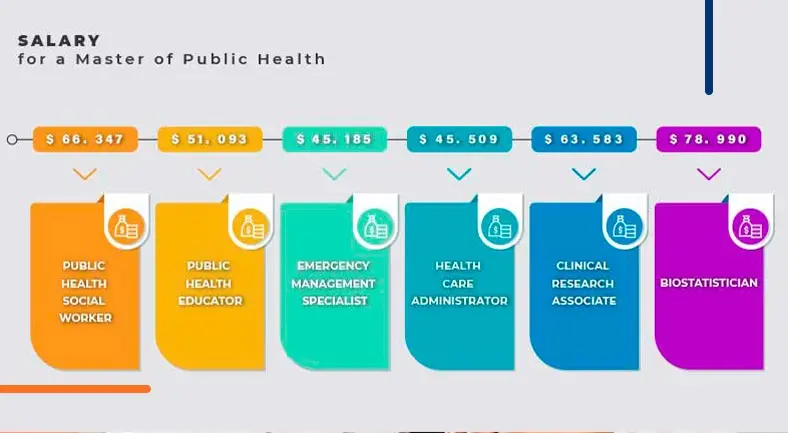
A Master of Public Health degree may lead to various professional opportunities that allow you to advocate for positive change in your community and worldwide. It is also a substantial financial investment.
Consider your specific job goals and whether a Master of Public Health will help you achieve them when deciding whether this degree is right for you.
If you want to acquire a Master of Public Health but don’t have the time to attend an on-campus program, you should consider earning your degree online.
Whether you’re already involved in public health research, policy, and practice or are planning a career in those areas, the online Master of Public Health with CBU ECAMPUS is designed to support your future ambitions.
Feel free to contact us for any additional information or learn more about the programme by downloading our prospectus.
1. What is a Master in Public Health (MPH)?
An MPH is a postgraduate degree focused on population health. It trains professionals to design, manage, and evaluate health programmes that prevent disease and promote wellbeing at community and national levels.
2. What jobs can I get with a Master in Public Health?
You can work as a health programme manager, epidemiologist, policy advisor, researcher, community health specialist, or educator in NGOs, government, or international agencies.
3. Can I study for an MPH online while working?
Absolutely. CBU ECAMPUS offers 100% online delivery, allowing you to study at your own pace while continuing your professional responsibilities.
4. Does the MPH lead to international health opportunities?
Yes. The skills gained through the MPH are globally transferable and align with the requirements of many international health organisations and development partners.